Commercial Metal Roofing · Erlanger, KY

Erlanger Commercial Metal Roofing Contractor

Tighten Worn Screws, Open End Laps, and Loose Trim on Metal Panels

As an Erlanger commercial metal roofing contractor, we install, repair, and maintain standing seam and R-panel roofs on warehouses, shops, offices, and canopies.

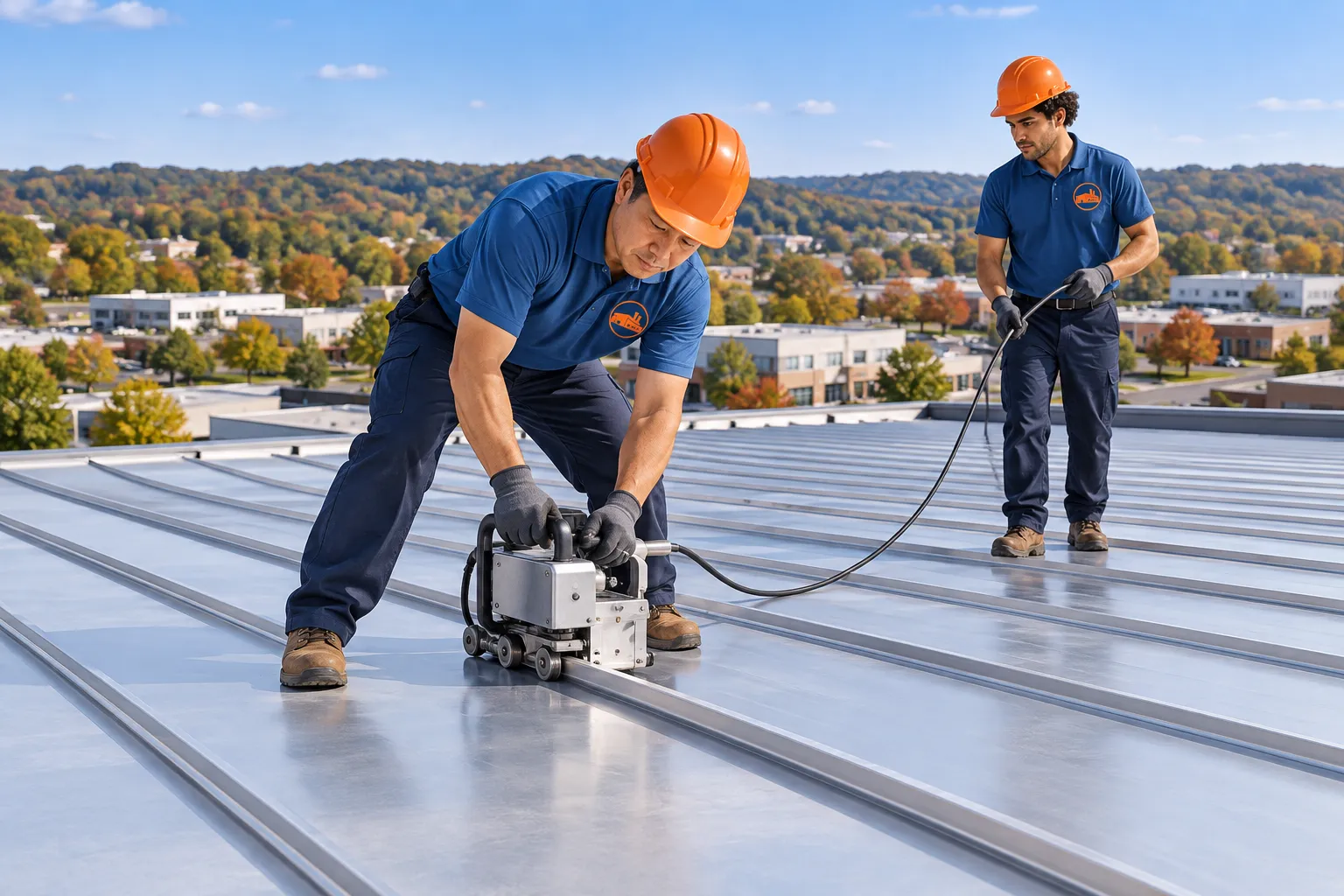
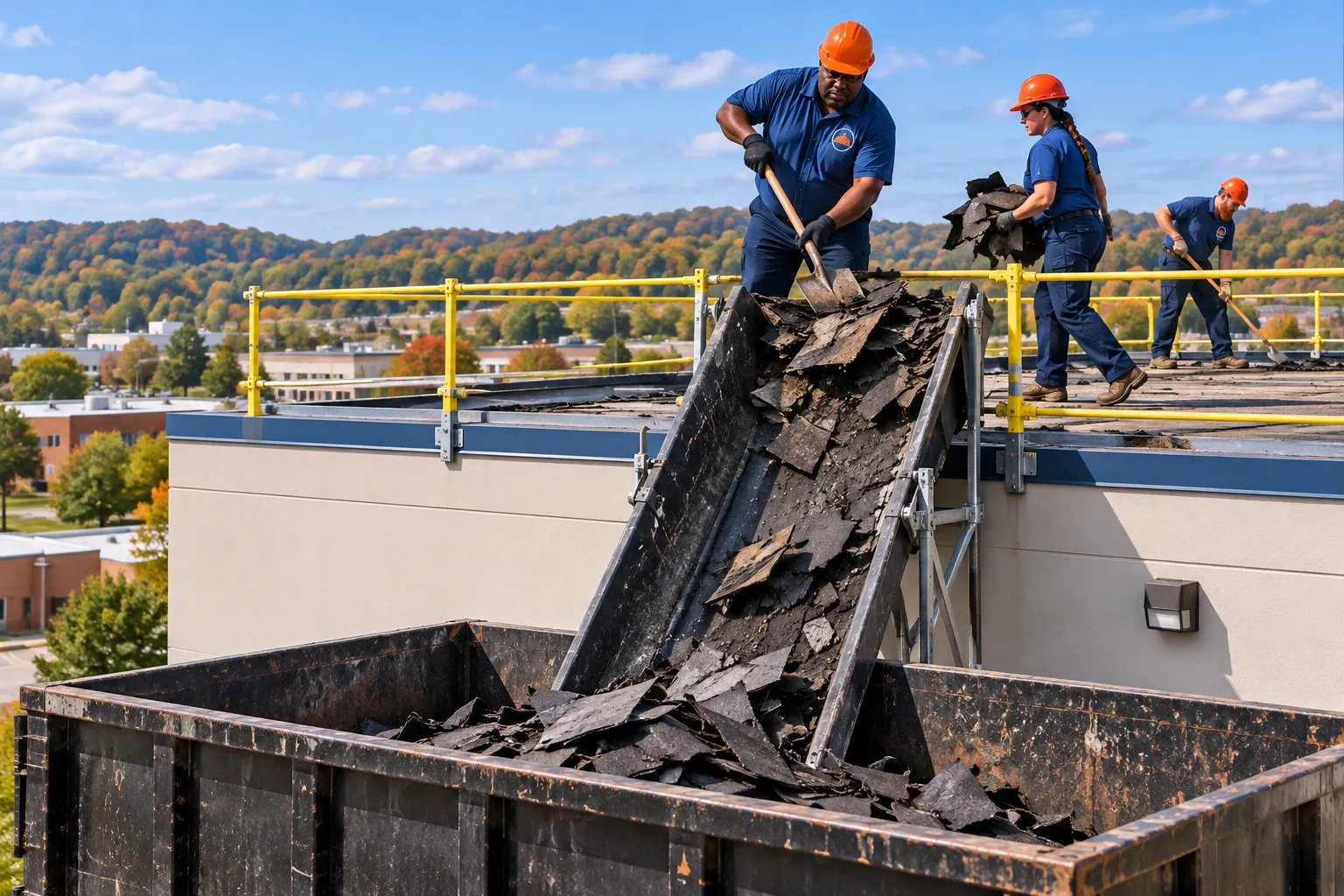
Roofers in logo uniforms fastening metal roof panels on a commercial building
  • Standing seam and R-panel

  • Screws and washers replaced

  • Ridge, eave, and rake trim

  • Checked after hail and wind

Standing Seam or R-Panel for Your Building?

An Erlanger commercial metal roofing contractor matches the panel to the building, since the two systems differ in how they attach and where water gets in.

FeatureStanding SeamR-Panel
FastenersHidden clips under the seamExposed screws through the panel face
Minimum slopeLower slopes with the right seamSteeper slopes
Panel movementPanels slide on clipsFixed by screws
UpkeepSeams and trimScrews, washers, and laps
Common buildingsOffices, schools, retail canopiesWarehouses, shops, barns, pole buildings
Typical gauge24-gauge steel26- or 29-gauge steel

Standing seam carries a higher upfront cost; R-panel costs less but needs fastener checks as washers age.

Commercial Metal Roofing Problems on Erlanger Buildings

Metal roofs leak at the small parts that seal them long before the panels give out.

Roofer in a logo uniform walking a commercial roof to check seams and flashing

Backed-Out and Rusted Screws

Exposed-fastener R-panel moves with every hot day and cold night, and the screws slowly work loose. Washers dry and crack, holes wear oval, and water follows the screw shank down to the purlin and drips inside far from where it entered.

Usually Means: New screws and washers, one size up where the holes have worn oval.
Open End Laps

Old sealant at panel overlaps shrinks and lets wind push rain uphill under the upper sheet.

Leaking Curb Flashing

Water dams on the uphill side of a unit curb and gets under flashing that was never fastened well.

Rust-Through Panels

Dented spots and cut edges rust through and need a matching panel or a cut-in section.

Cracked Sealant at Boots

Pipe boots and vent collars lose their sealant and leak along the pipe into the building.

Commercial Roofing Options for Erlanger

Metal work here falls into three kinds of jobs, from a new roof to keeping an older one tight.

New Standing Seam or R-Panel

Panels go on over underlayment or faced blanket insulation, fastened with floating clips or self-drilling screws with sealing washers. Ridge cap, eave and rake trim, and closures finish every edge.

Retrofit Framing Over a Flat Roof

Light-gauge steel framing builds pitch over an existing flat roof, and new panels go on top. The old roof stays as a dry layer, and an engineering check and permit come first.

Repairs and Upkeep

Worn screws, open laps, rusted panels, and loose flashing get fixed while solid panels stay in place. Checks after hail or high wind catch problems before water reaches the building.

Benefits of Replacing Your Roof

When panels are past repair, a new metal roof fixes what years of screw swaps leave behind.

Where It Fails

Thousands of Exposed Screws

Every exposed fastener on worn R-panel is a future leak once its washer ages.

What The New Work Does

Standing seam hides its fasteners under the seam on floating clips, leaving far fewer holes through the panels.

Where It Fails

Thin Panels That Dent

Older 29-gauge sheet dents under foot traffic near rooftop units and rusts at the dents.

What The New Work Does

Thicker 24-gauge panels resist dents around units and service paths.

Where It Fails

Faded, Chalking Finish

Worn paint on a visible office or retail roof lets bare steel start to rust.

What The New Work Does

PVDF paint holds color on visible roofs, and bare Galvalume suits warehouses and shops.

Where It Fails

Panels Locked in Place

Long panels fixed tight to the purlins buckle and pull screws as the steel heats and cools.

What The New Work Does

Floating clips and expansion details at the ridge let long panel runs move freely.

Drips Along a Purlin Line?

Call and say whether the drips follow a row of screws, show up at a panel overlap, or sit below a unit. Each one points to a different repair.

How Commercial Metal Roofing Goes Up in Erlanger

Each layer is set and checked before the next one covers it.

  1. Inspect Your Roof

    We check screws, washers, end laps, panels, trim, gutters, and curb flashing, and look at purlins and insulation from inside. That shows whether repairs or new panels fit the roof.

  2. Pick Panel, Gauge, and Finish

    Standing seam or R-panel is matched to slope and building use. Gauge sets strength, and the finish is picked for visibility and exposure near busy roads or plant exhaust.

  3. Set Underlayment or Insulation

    Synthetic underlayment goes over a solid deck, or faced blanket insulation drapes over the purlins. Headwall and sidewall flashing is laid out where the roof meets a taller wall.

  4. Fasten Panels and Clips

    Floating clips hold standing seam so panels slide as they heat and cool. R-panel gets self-drilling screws with sealing washers driven into purlins in straight rows.

  5. Trim, Close, and Walk the Roof

    Ridge cap, eave and rake trim, and closures set in butyl tape seal the edges. Gutters are cleared and each fastener row is spot-checked before the roof is handed over.

More Roof Work Near Metal Buildings

Metal buildings often sit beside low-slope wings and flat additions that need their own system.

Questions for an Erlanger Commercial Metal Roofing Contractor

Answers on panels, gauges, finishes, retrofits, and keeping an older metal roof tight.

New Metal Roofs

What goes into standing seam metal roof installation in Erlanger KY?

Layers, set in order. Underlayment over a solid deck or faced blanket insulation over purlins comes first, then panels on floating clips hidden in the seam, then ridge cap, eave and rake trim, and closures. Long panel runs on Erlanger-area warehouses get expansion details at the ridge so the steel moves freely.

What commercial metal roof gauge and finish options are common?

Standing seam usually runs 24-gauge steel, and R-panel 26- or 29-gauge, finished with Galvalume or paint. Bare Galvalume suits warehouses, barns, and shops; silicone-modified polyester gives budget-friendly color on R-panel; PVDF paint holds color on visible offices and retail. Thicker 24-gauge resists dents near rooftop units.

Can you convert a flat roof to a metal roof with retrofit framing?

Yes. Light-gauge steel framing is built over the existing flat roof to create pitch, and new panels go over it while the old roof stays as a dry layer. Engineers check the deck and joists for the added load, and gutters, rooftop units, and attic ventilation get planned before a permit is pulled.

Repair and Upkeep

How is an existing commercial metal roof repaired?

Repairs replace the small parts that seal the roof while solid panels stay. Backed-out or rusted screws get new screws and washers, one size up in worn holes; rust-through panels get a matching panel or cut-in section; open end laps are scraped, restitched, and resealed with butyl tape; leaking curb flashing is refastened, sometimes with a new cricket.

What does commercial metal roof maintenance after storms include?

A roof walk after hail or high wind comes first. Gutters, valleys, and the uphill side of curbs are cleared of leaves and grit, fastener rows near the eave and ridge are spot-checked, and cracked sealant at pipe boots and vents is renewed before water reaches the building.

When does an old metal roof need new panels?

New panels make sense when rust-through spreads across many sheets or the panels are too thin to hold new screws. Scattered damage gets cut-in sections of the same profile, while widespread rust and worn holes point to a new roof over the same purlins.

Call an Erlanger Commercial Metal Roofing Contractor

Get a free estimate for new panels, a retrofit over a flat roof, or repairs to screws, laps, and trim.

Call Us · (283) 202-7024