

Flat Roofing · Erlanger, KY

Erlanger Flat Roofing Contractor

Find Out Whether Your Flat Roof Needs Repair, Recover, or Replacement

Call an Erlanger flat roofing contractor who rebuilds low-slope roofs around drainage, so water reaches drains and scuppers instead of sitting on the deck.

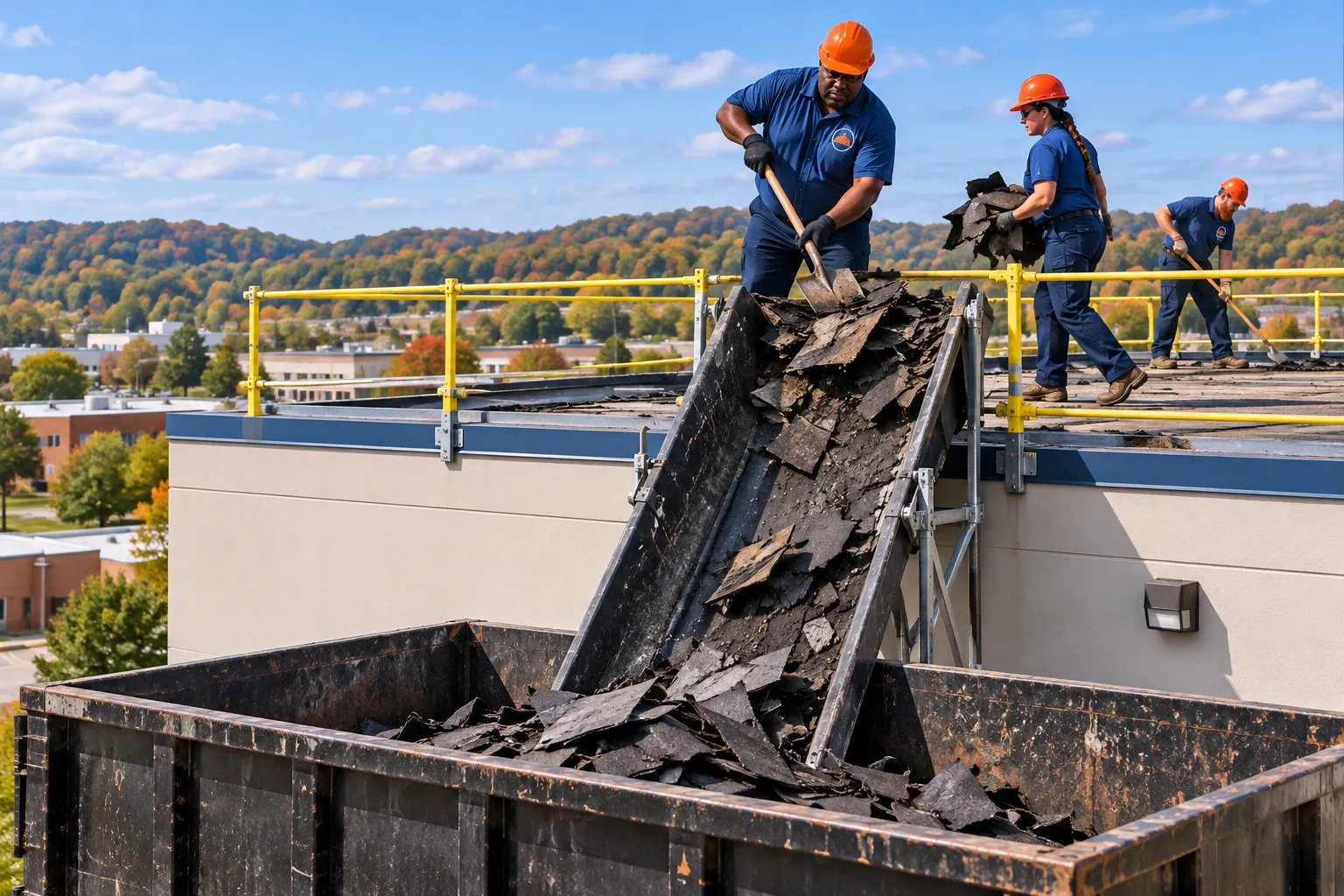
Roofers in logo uniforms tearing an old commercial roof down to the deck
  • Slope built into insulation

  • New drain rings and strainers

  • Moisture survey first

  • Scuppers re-lined and flashed

Which Way Should Your Flat Roof Go?

An Erlanger flat roofing contractor sorts each roof by what the core cuts and the drainage walk show, then matches the work to it.

What the Roof ShowsPoints to RepairPoints to Recover or Replace
Wet insulationA few small wet spots near one curbWet boards across large areas
Existing layersOne roof in fair shapeTwo roofs already on the deck
PondingOne clogged strainerWater standing for days over wide areas
SeamsOne corner liftingLaps opening across the field
Deck from insideClean, dry flutesRust through steel deck flutes
Drains and scuppersDebris and a loose strainerRusted rings and failed liners

Flat Roofing Problems We See on Erlanger Buildings

A truly level roof holds water, and most flat-roof leaks trace back to where that water sits.

Roofer in a logo uniform walking a commercial roof to check seams and flashing

Ponding Across Large Areas

Water that stays on a deck for days after rain ages the membrane fastest right where it sits and keeps working at every lap underneath. Low spots usually come from a deck that sagged, insulation that crushed, or drains set higher than the field around them.

Usually Means: Tapered insulation and crickets designed into the new roof so water reaches the drains.
Clogged Strainers

Leaves and grit block an interior drain and back water up over the clamping ring.

Scuppers Rusted Through

Old liners in the parapet opening leak into the wall long before water reaches the downspout.

Water Dammed Behind Curbs

Rooftop unit curbs block flow on the uphill side, where a cricket was never built.

Soft Spots Underfoot

Spongy areas show polyiso that has taken on water and lost its insulating value.

Commercial Roofing Options for Erlanger

Flat roofs drain three ways, and each new roof is built around the path its water takes.

Interior Drains

Water runs through drain bodies and down pipes inside the building. New clamping rings, strainers, and tapered boards around each bowl stop pooling where the membrane meets the drain.

Scuppers Through the Parapet

Openings in the parapet wall send water to downspouts outside. Each one is re-lined with sheet metal and flashed to the new membrane, with overflow scuppers set higher as a backup.

Gutters at an Open Edge

Roofs without parapets drain over the edge into gutters. New fascia and gutters tie into the membrane at a height that matches the finished insulation.

Benefits of Replacing Your Roof

Replacing a worn flat roof is the moment to fix the drainage that wore it out.

Where It Fails

Dead-Level Decks

Without built-in pitch, water pools in the middle of each bay and behind every curb.

What The New Work Does

Boards cut to a pitch move water toward drains, and crickets turn it around curbs and chimneys.

Where It Fails

One Way Off the Roof

Parapet roofs with only main drains flood when a single strainer clogs.

What The New Work Does

Overflow drains or overflow scuppers give water a second way off the deck.

Where It Fails

Hidden Wet Boards

A new surface laid over soaked insulation wastes the membrane and keeps feeding the deck moisture.

What The New Work Does

Wet boards are removed after a moisture survey, and the full stack is rebuilt from the deck up.

Where It Fails

Edge Heights Out of Line

Thicker new insulation can leave scupper openings and edge metal sitting too low.

What The New Work Does

Measurements taken before tear-off keep scuppers, fascia, and curbs lined up with the new surface.

Water Still Standing Two Days After Rain?

Snap a photo of where it pools and call. Tell us whether the roof drains inside, through the wall, or over the edge, and how long the water usually stays.

How Flat Roofing Work Runs in Erlanger

The drainage plan comes first, and the membrane goes over it last.

  1. Inspect Your Roof

    We walk the field after rain where we can, mark ponding, check every drain and scupper, and cut cores. An infrared scan or core grid measures how much insulation is wet.

  2. Map Slope to Each Drain

    High points and drain heights are measured across the deck. Tapered insulation is laid out so every bay pitches to a drain, with crickets drawn behind curbs.

  3. Tear Off and Repair the Deck

    Sections sized to what can be closed by evening come off to the deck. Soft wood and rusted steel get repaired, and each day ends with a night tie-in.

  4. Rebuild Drains and Edges

    Drain bodies are cleaned or refitted with rings and strainers, scuppers are re-lined, and gravel stops are replaced with new fascia set to the new roof height.

  5. Install the Membrane and Test Flow

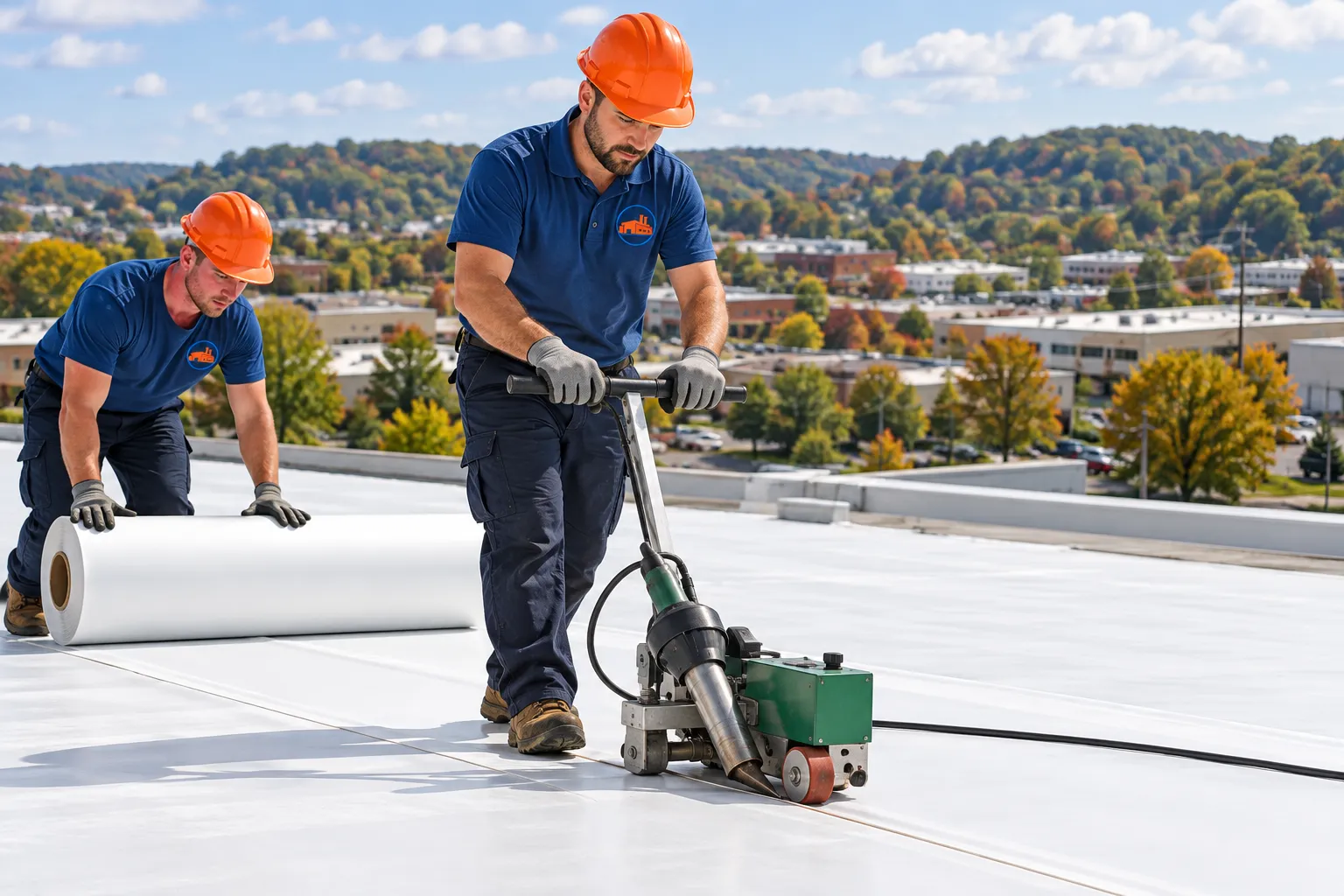
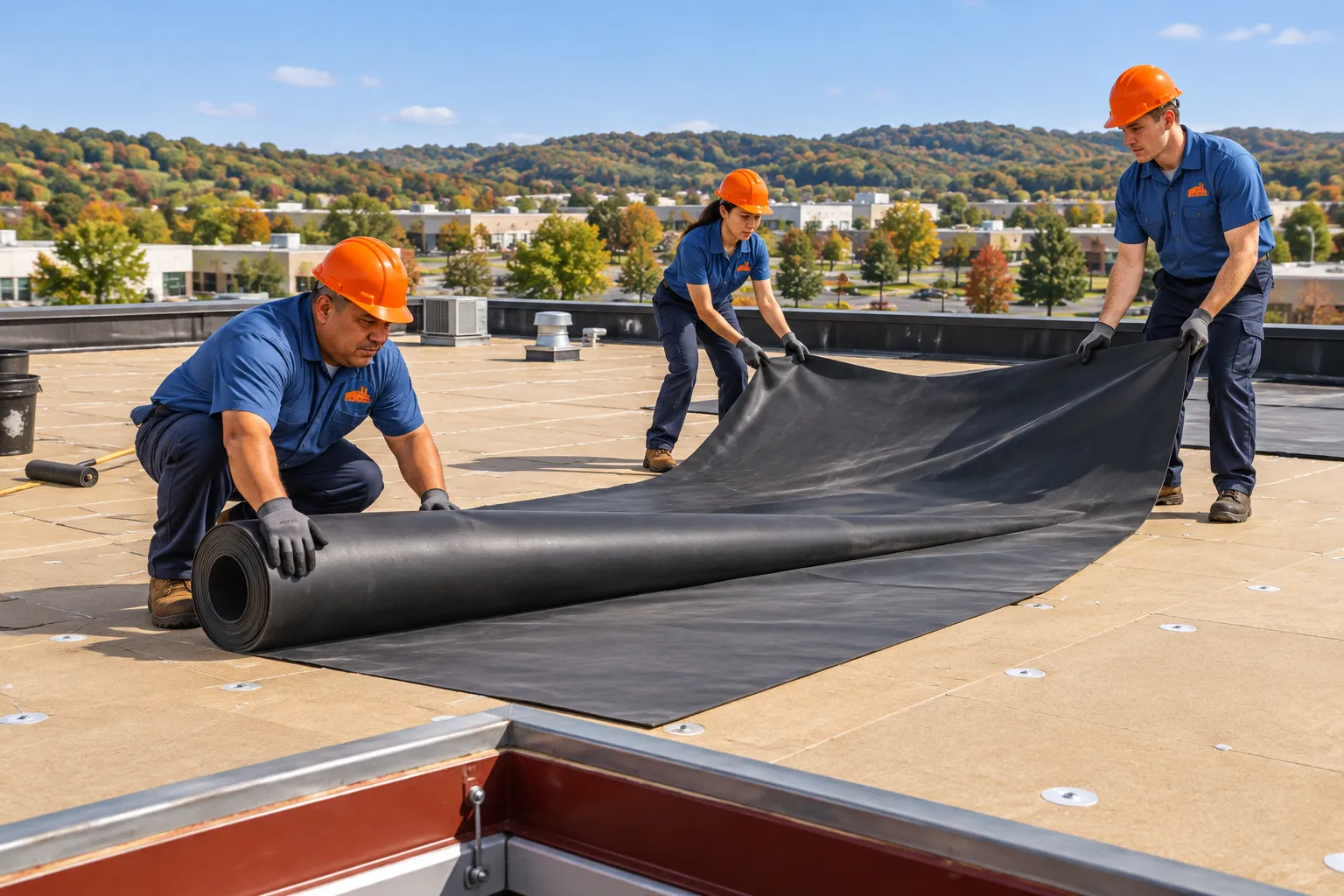
    TPO or EPDM goes over the tapered system and is flashed to every drain and edge. Water run toward the bowls confirms the pitch before the job is closed out.

Membranes That Go Over Erlanger Flat Roofs

Once the drainage is set, one of these systems becomes the waterproof layer on top.

Ask an Erlanger Flat Roofing Contractor

Plain answers about water, slope, wet boards, and when a flat roof gets replaced.

Drainage

Why does water keep pooling on my flat roof?

Pooling means the roof has no working pitch toward its drains. Decks sag, insulation crushes under foot traffic, and drains sometimes sit higher than the field around them. Tapered boards and crickets in a new roof correct that; on an existing roof, cleared strainers and rebuilt drain rings help where the slope itself is fine.

What is tapered insulation for ponding?

Tapered insulation is polyiso cut to a slight pitch and laid so each section of roof falls toward a drain or scupper. It adds insulating value while it builds slope. Crickets, small sloped sections, are added uphill of curbs so water turns around the unit instead of damming behind it.

Do flat roofs need overflow drains?

Parapet roofs need a second way for water to leave. Overflow drains or overflow scuppers sit a little higher than the main drains, so a clogged strainer still lets water off the deck through the backup path. Replacement is the natural time to add them where they are missing.

Replacement

Can a flat roof replacement go over wet insulation?

No. A new membrane over soaked boards traps the water, wastes the new sheet, and keeps feeding the deck moisture. The Kentucky Building Code also bars a recover over a water-soaked roof. A moisture survey finds the wet areas, and those boards come out to the deck first.

How many roof layers can a flat roof carry before tear-off?

One existing roof can take a recover if it is dry and the deck is solid. Under the 2018 Kentucky Building Code, a roof with two or more applications already on needs a full tear-off, and a core cut confirms the layer count before a plan is set.

How long do flat roof repairs last compared with replacement?

Repair life depends on the roof around the fix. Rebuilt flashing on an otherwise sound roof holds for a long stretch, while patches on a membrane with many open laps and wet boards get chased season after season. Core cuts show which situation the roof is in.

Book an Erlanger Flat Roofing Contractor

Get a free estimate built on a drainage walk and core cuts, for repair, recover, or a full replacement.

Call Us · (283) 202-7024